


Selecting a metal shredder is not simply a matter of comparing machine prices. For recycling companies and scrap metal processors, equipment performance, configuration flexibility and long-term maintenance costs all influence the success of a project.
With different manufacturers offering various shredding technologies, buyers need to understand what makes a suitable industrial metal shredder and how to evaluate potential suppliers.
Before contacting metal shredder manufacturers, buyers should identify the type of equipment required for their materials.
Double shaft metal shredder
A double shaft shredder uses two rotating shafts to tear and shear bulky materials. It is commonly considered for steel drums, car shells, aluminum scrap, metal frames and mixed metal waste.
Single shaft metal shredder
Single shaft machines generally use a rotor and stationary counter knives. Their applications depend on rotor design, screen configuration and material characteristics.
Hammer mill metal shredder
Hammer mill systems use high-speed rotating hammers to break materials into smaller pieces. They are often used in metal recycling processes requiring intensive size reduction.
The right choice depends on material dimensions, processing capacity, output specifications and the overall recycling process.
Not all metal shredder machines are designed for the same operating conditions. Before placing an order, consider the following factors.
1. Machine structure and cutting technology: Ask about the number of shafts, blade arrangement, rotor structure and drive system. For bulky scrap, double shaft shredding technology may offer a suitable combination of tearing force and controlled feeding.
2. Blade materials and service life: Blade material has a direct influence on wear resistance and maintenance requirements. Depending on the application, manufacturers may offer H13, SKD-11, D2 or DC53 blade options.
Buyers should confirm which material grade is recommended for their actual scrap rather than selecting blades based on hardness alone.
3. Capacity and configuration: A reliable supplier should evaluate the material before recommending a model. Feeding dimensions, material thickness, bulk density and expected throughput all matter.
Request a technical proposal based on your actual operating requirements instead of relying only on a general capacity description.
4. Machine protection and control: Metal scrap may contain unexpected foreign objects. Overload detection, automatic reversing and appropriate control systems can help protect the cutting chamber and reduce unnecessary downtime.
5. Technical support and spare parts: Shredder blades and other wear components require periodic inspection and maintenance. Before purchasing, check the availability of replacement parts, installation guidance and technical assistance.
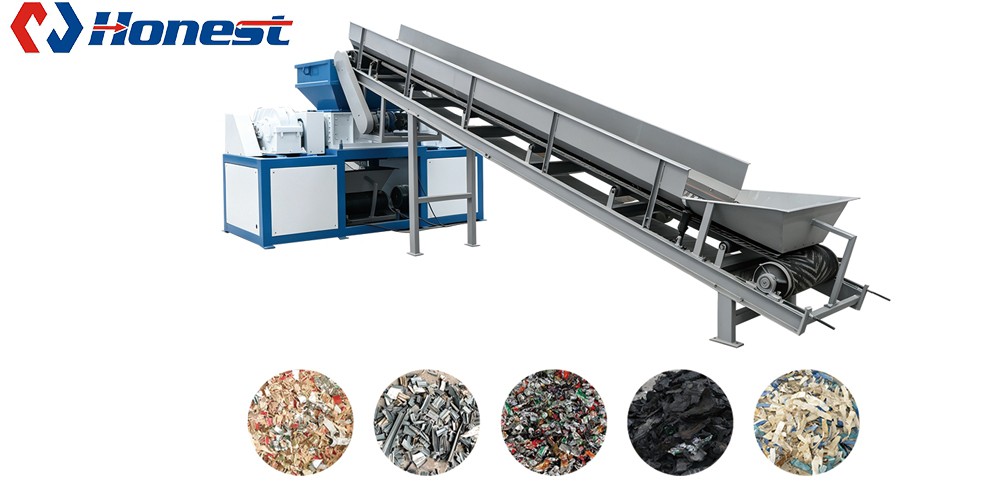
Double shaft shredders are suitable for many bulky scrap applications because their cutters can grip and tear irregular materials.
The two shafts rotate at relatively low speeds while producing substantial cutting torque. This working principle is useful when processing materials that cannot be easily handled by conventional size-reduction equipment.
The output size can be influenced by blade width, blade arrangement and the overall cutting configuration.
For recycling facilities that need to process different metal scrap streams, a customized double shaft shredder may provide greater flexibility than a machine designed for only one fixed material.
Honest Shredder supplies industrial double shaft shredding equipment for metal recycling applications.
Its HNDM series features multiple machine configurations, with listed motor powers ranging from 30 × 2 kW to 160 × 2 kW across the HNDM1000–HNDM2600 models.
The equipment can be used for processing aluminum can bundles, steel drums, car shells, copper-aluminum radiators, scrap cables, engine blocks and other metal materials, subject to suitable machine configuration.
The manufacturer also offers customizable equipment options, replaceable cutting blades and an automatic rotor reversing function for overload protection.
When comparing metal shredder manufacturers, the best purchasing decision comes from matching the equipment to the actual recycling application.
Prepare the following information before requesting a quotation:
Main material types and material photos.
Maximum feeding dimensions.
Expected hourly processing capacity.
Required output size.
Available installation space.
Local voltage and power supply requirements.
With these details, the manufacturer can recommend a more suitable machine configuration and provide a more accurate technical proposal.
Contact Honest Shredder to discuss your metal recycling project and find a double-shaft metal shredder suited to your production requirements.
Henan Honest Heavy Machinery : http://www.honestshredder.com/,All rights reserved。
Welcome to visit Henan Honest website. If you want to learn more about our equipments, Contact us Now to find out what we can do for you next project!
