


The primary economic driver for operating a scrap metal shredder is maximizing the bulk density and cleanliness of the finished scrap. Smelters and foundries demand dense, uniform scrap to maximize furnace charging efficiency, reduce melting energy consumption, and limit oxidation losses.
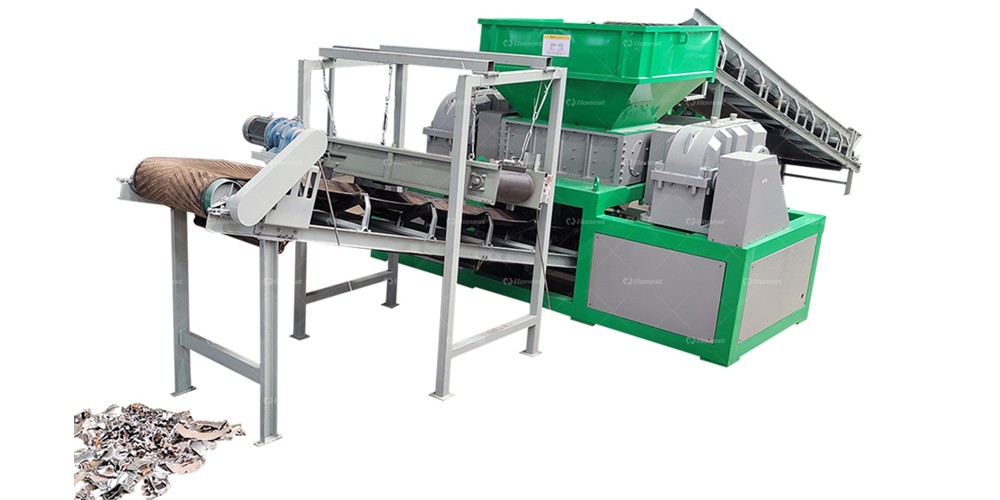
Stages of Density Optimization
Size Reduction: Interlocking rotary knives rip bulky scrap apart, breaking welds, folds, and structural seams.
Liberation of Non-Metallics: The mechanical tearing action loosens trapped contaminants such as plastics, insulation, foam, and rubber from metal skeletons.
Screen Classification: Undersized particles pass through bottom sorting grates immediately, while oversize fractions remain in the cutting zone until reduced to the required dimension.
Operational Metrics for Operators
Specific Energy Consumption: Measured in kilowatt-hours per ton processed (kWh/t). Regular blade adjustments and tight tolerances between rotating and stationary knives prevent dull rubbing, which spikes power draw without advancing throughput.
Bulk Density Targets: Optimally shredded light scrap typically aims for bulk densities between 0.8 and 1.4 tons per cubic meter, optimizing shipping container payloads and electric arc furnace melt cycles.
Henan Honest Heavy Machinery : http://www.honestshredder.com/,All rights reserved。
Welcome to visit Henan Honest website. If you want to learn more about our equipments, Contact us Now to find out what we can do for you next project!
