


Handling light-to-medium metal scrap—such as automotive stampings, aluminum extrusions, white goods casings, and metal turnings—creates major logistics inefficiencies. Loose sheet metal scrap weighs as little as 100–150 kg/m³, making transport economically unviable.
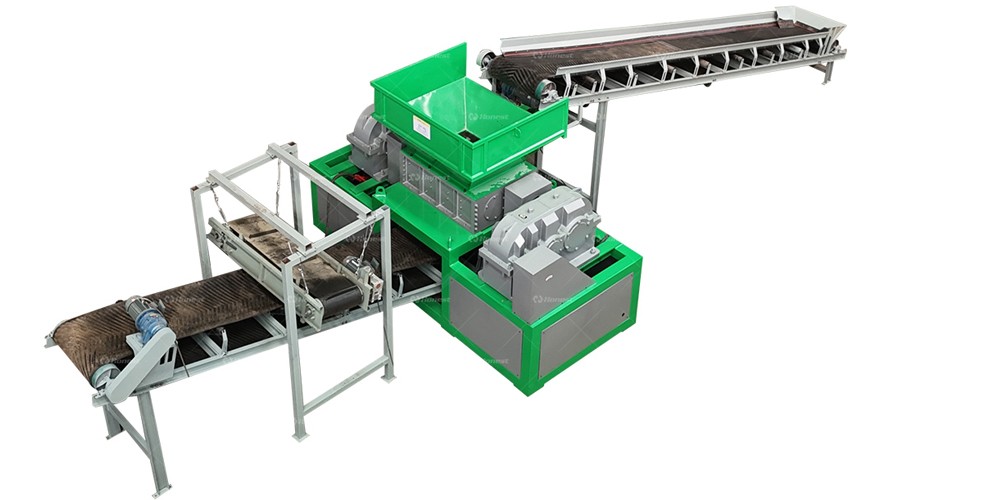
An inline metal shredding machine condenses bulk scrap into a dense, uniform, furnace-ready charge with a bulk density exceeding 800 kg/m³.
Low-Speed Shear vs. High-Speed Hammer Separation
Understanding the metallurgical difference between shearing and hammering determines process efficiency:
Dual-Shaft Rotary Shear (Low Speed, High Torque):
Mechanism: Opposed cutting discs shear, slice, and rip.
Best for: Long aluminum extrusions, sheet metal offcuts, electrical cabinets, and tangled steel turnings.
Advantage: Operates with minimal noise, low dust, and zero ballistic hazard. Low energy consumption per metric ton.
Hammermill Shredders (High Speed, Impact):
Mechanism: Swinging hammers beat the scrap against breaker plates and grate bars at 600–900 RPM.
Best for: Separating non-ferrous attachments from steel stampings, peeling off paint/coatings, and creating rounded pellets.
Addressing Metal Jamming and Shock Load Absorption
Metal shredding generates violent peak torque spikes when high-yield structural sections enter the hopper. Premium machines mitigate destructive drive shock through:
Planetary Gearbox Isolation: Cushioning torque loads through multiple planetary gear stages to prevent pinion gear tooth shear.
Hydraulic Drive Options: In heavy-duty operations, continuous hydraulic drive provides infinitely variable speed and instantaneous torque release at zero stall RPM, eliminating mechanical gear train shock.
Henan Honest Heavy Machinery : http://www.honestshredder.com/,All rights reserved。
Welcome to visit Henan Honest website. If you want to learn more about our equipments, Contact us Now to find out what we can do for you next project!
