


In mixed industrial scrap, motor stators, radiators, and electronics, non-ferrous metals like copper and aluminum represent the vast majority of financial value. However, manual hand-sorting is labor-intensive, slow, and inefficient for fine, crushed particles.
By deploying an automated metal crushing and sorting plant, recycling yards can automatically separate iron, copper, aluminum, and plastic at throughputs ranging from 10 to 50 tons per hour.
The Role of Secondary Crushing in Material Liberation
Before non-ferrous metals can be separated, they must be physically liberated from iron housings, plastic casings, and insulation.
Electric Motors & Stators: Sheared by double-shaft shredders and crushed by heavy hammers to detach copper windings from iron cores.
Copper-Aluminum Radiators: Impact crushing breaks the mechanical bond between aluminum fins and copper tubes.
The Physics Behind Eddy Current Separation (ECS)
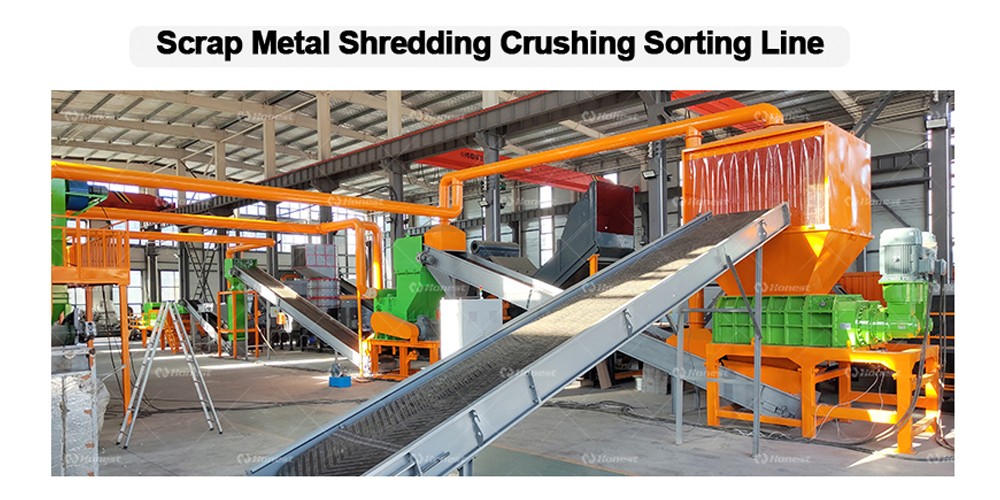
After iron is removed by magnetic separators, non-ferrous metals pass over an Eddy Current Separator:
1. A high-speed rotor lined with rare-earth permanent magnets rotates inside a non-metallic belt drum.
2. As conductive non-ferrous metals (aluminum, copper) enter the magnetic field, alternating magnetic flux induces eddy currents inside the metal particles.
3. These induced currents generate an opposing magnetic field, physically propelling the non-ferrous metals forward over a splitter belt, while inert plastics fall straight down by gravity.
Expected Yields and Purity Standards
Ferrous Metal Purity**: ≥ 98%
Aluminum & Copper Recovery Rate**: ≥ 95%
Impurity Content in Recovered Metal**: < 2%
Automating non-ferrous recovery allows processors to turn low-grade mixed scrap into premium-grade metallic commodities ready for immediate smelting.
Henan Honest Heavy Machinery : http://www.honestshredder.com/,All rights reserved。
Welcome to visit Henan Honest website. If you want to learn more about our equipments, Contact us Now to find out what we can do for you next project!
