


In industrial recycling, the hardest part of shredding is not always cutting the material. Irregular feed sizes, changing material composition, contamination, and continuous operation can place considerable stress on the machine.
A heavy duty shredder is designed to handle demanding processing conditions through an appropriate combination of cutting geometry, drive power, shaft strength, and machine structure. However, a larger motor alone does not guarantee better performance. The entire shredding system must be engineered around the application.
Cutting Torque Matters More Than Motor Power Alone
Motor power is an important specification, but it should be evaluated together with torque, shaft speed, and transmission design.
For bulky materials, a relatively low-speed, high-torque cutting system may help the machine grip and shear the feedstock. Blade arrangement and cutting clearance also influence how material enters the cutting chamber and how effectively it is reduced.
If the incoming material includes unexpected hard objects, overload protection and suitable control systems can help reduce the risk of serious equipment damage. These features should be selected according to the actual hazards present in the feedstock.
Choose the Shredder According to the Material
A heavy duty shredder used for plastic waste may require a different cutting configuration from one used for scrap metal or industrial wood waste.
For example, bulky plastic products often need effective gripping and feeding. Metal recycling applications may require stronger cutting components and careful control of the incoming material. Wood waste processing may prioritize continuous feeding and an output suitable for subsequent handling or size reduction.
Before selecting a machine, identify the material's dimensions, hardness, moisture content, contamination level, and expected variation between batches.
Durability and Maintenance Affect Total Cost
The initial purchase price is only one part of the cost of owning a shredder. Blade replacement, labor, downtime, electricity consumption, and service access all influence long-term operating expenses.
Useful design considerations include replaceable cutting tools, accessible maintenance points, a robust drive system, and protection against overload. Buyers should also ask how blade wear is assessed and whether commonly replaced parts are readily available.
A machine that is easy to maintain may provide better operational value than one with a lower purchase price but frequent unplanned stoppages.
Building a Complete Shredding System
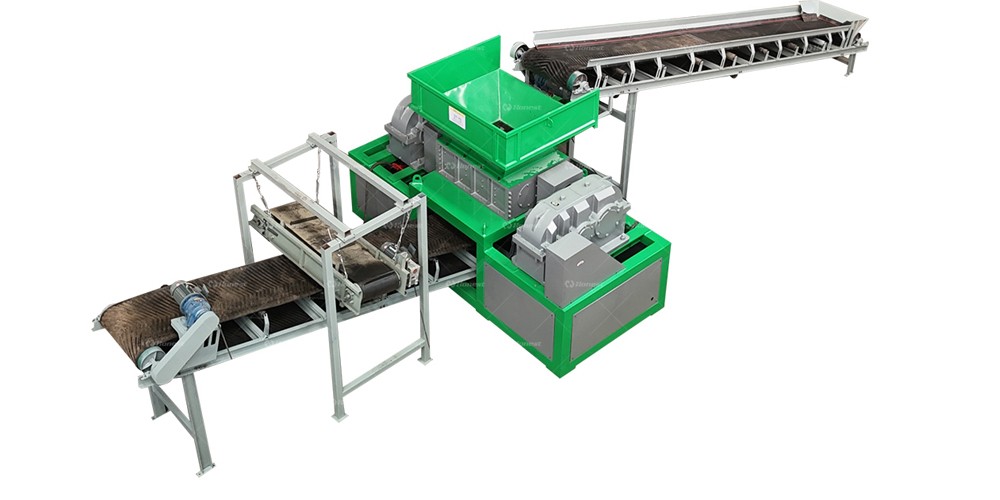
A heavy duty shredder is often only the first stage of an industrial recycling line. Depending on the application, downstream equipment may include conveyors, magnetic separation, screening, granulation, or dust collection.
The complete process should be designed around the desired recovered material, not simply the shredder's nominal output.
Frequently Asked Questions
What capacity should a heavy duty shredder have?
Capacity depends on material density, feed dimensions, cutting configuration, and the required output. Request application-specific estimates rather than relying on a maximum advertised figure.
Are heavy duty shredders suitable for continuous operation?
Some models are designed for continuous industrial use, but suitability depends on the duty cycle, material, cooling, maintenance, and installed configuration.
How can operating costs be reduced?
Correct machine sizing, appropriate blade selection, preventive maintenance, and stable feeding can help reduce unnecessary wear and downtime.Ultimately, the best heavy duty shredder is not necessarily the most powerful model. It is the machine that can process the intended material reliably while meeting production, maintenance, and operating-cost requirements.
Henan Honest Heavy Machinery : http://www.honestshredder.com/,All rights reserved。
Welcome to visit Henan Honest website. If you want to learn more about our equipments, Contact us Now to find out what we can do for you next project!
